Texture describes how something feels when you touch it. A surface or material can feel smooth, rough, soft, sticky, bumpy, or many other ways. In this lesson, you’ll learn common words to describe texture in English, with clear meanings and useful example sentences.
Common Texture Words in English
Below are common adjectives used to describe the texture of surfaces, materials, and everyday objects. Each word includes a clear definition and example sentence.
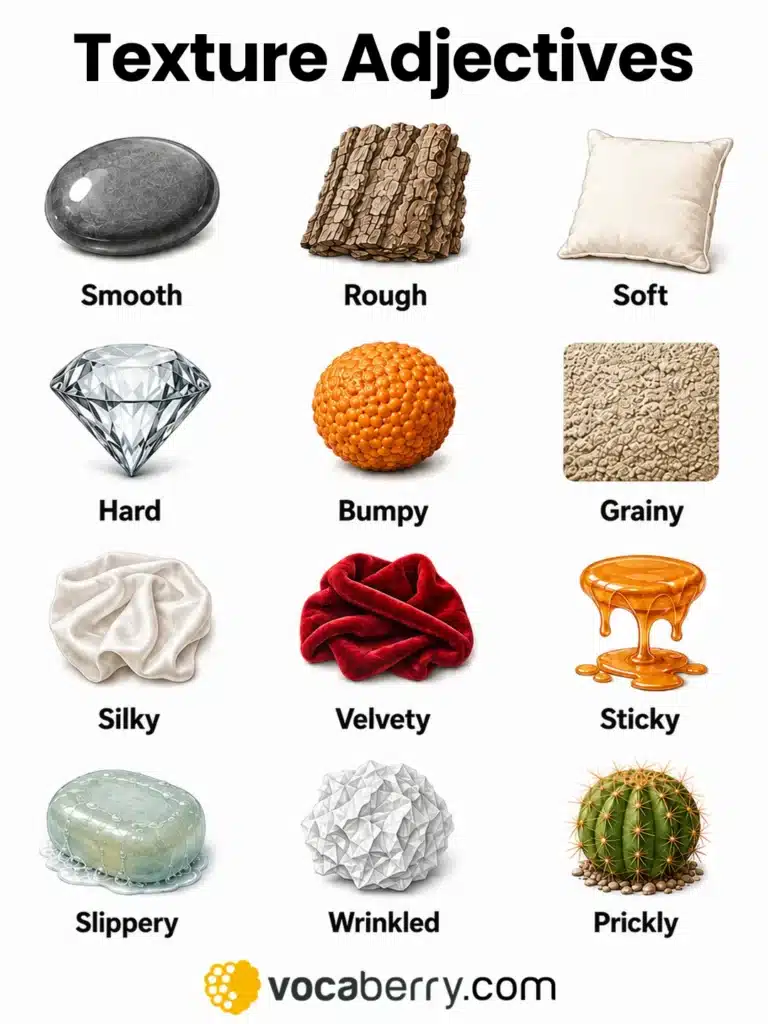
Smooth
Smooth describes a surface that is even and has no rough or raised parts.
Example: The glass table feels completely smooth when you run your hand across it.
Rough
Rough describes a surface that is uneven and not smooth to the touch.
Example: The tree bark feels rough, so be careful not to scrape your hand against it.
Soft
Soft describes something that is not hard and is easy to press or bend.
Example: This blanket feels incredibly soft against my skin.
Hard
Hard describes something solid that is difficult to press, bend, or change shape.
Example: The floor is very hard, so sitting on it for a long time is uncomfortable.
Bumpy
Bumpy describes a surface with many small raised areas.
Example: The road is quite bumpy, so the car shakes as we drive along it.
Uneven
Uneven describes a surface that is not flat, level, or regular.
Example: Watch your step because the ground is uneven near the entrance.
Coarse
Coarse describes a material that feels rough because its fibers or particles are thick or large.
Example: The rope feels coarse and can be uncomfortable to hold with bare hands.
Grainy
Grainy describes a surface that feels as though it has many tiny grains or particles.
Example: This paper has a slightly grainy texture rather than a completely smooth surface.
Gritty
Gritty describes something that feels rough because of tiny hard particles, such as sand.
Example: My hands felt gritty after I had been digging in the garden.
Silky
Silky describes something that feels very smooth and soft, like silk.
Example: The scarf has a silky texture that feels smooth against the skin.
Velvety
Velvety describes a surface that feels very soft and smooth, like velvet.
Example: The flower petals feel velvety when you touch them gently.
Fuzzy
Fuzzy describes a surface covered with short, soft fibers or hairs.
Example: The peach has a slightly fuzzy skin.
Furry
Furry describes something covered with fur or a soft material that feels like fur.
Example: The rabbit’s furry coat keeps it warm in cold weather.
Fluffy
Fluffy describes something that is soft, light, and full of air.
Example: These pillows are so fluffy that your head sinks into them.
Firm
Firm describes something that feels solid but still gives a little when pressed.
Example: I chose a firm mattress because softer ones make my back ache.
Squishy
Squishy describes something very soft that changes shape easily when you press or squeeze it.
Example: The toy is squishy enough to squeeze into almost any shape.
Spongy
Spongy describes something that is soft, full of air, and easy to press.
Example: After several days of rain, the grass felt spongy under my feet.
Rubbery
Rubbery describes something that feels flexible and elastic, like rubber.
Example: The phone case has a rubbery surface that makes it easier to grip.
Sticky
Sticky describes something that sticks easily to your fingers or another surface.
Example: The spilled juice left the kitchen counter sticky even after I wiped it once.
Slippery
Slippery describes a smooth or wet surface that is difficult to hold or walk on safely.
Example: Be careful on the bathroom floor because it gets slippery when it is wet.
Slimy
Slimy describes something that feels wet, soft, and unpleasantly slippery.
Example: The rocks by the river were covered with slimy green algae.
Greasy
Greasy describes something that feels oily or covered with grease.
Example: My hands felt greasy after I touched the bicycle chain.
Waxy
Waxy describes something that looks or feels like wax.
Example: The leaves have a smooth, waxy surface that helps water roll off them.
Ridged
Ridged describes a surface with raised lines or narrow raised areas.
Example: The bottle has a ridged surface that makes it easier to hold.
Wrinkled
Wrinkled describes a surface with many small lines, folds, or creases.
Example: The paper became wrinkled after it got wet and dried again.
Prickly
Prickly describes a surface with many small, sharp points that can hurt when touched.
Example: The cactus is very prickly, so you should avoid touching it with bare hands.
Scratchy
Scratchy describes a material that feels rough and slightly uncomfortable against your skin.
Example: The wool scarf was too scratchy to wear directly around my neck.
Lumpy
Lumpy describes something with uneven raised areas or small lumps.
Example: The old mattress has become lumpy, which makes it uncomfortable to sleep on.