Food can have many different tastes and flavors. Some foods are sweet, some are salty, and others may be sour, bitter, or spicy. In this lesson, you’ll learn common taste vocabulary and adjectives in English and how to use them to describe food and drinks.
Common Taste Adjectives in English
Below are 30 common adjectives used to describe the taste and flavor of food and drinks. Each word includes a clear definition and example sentence.
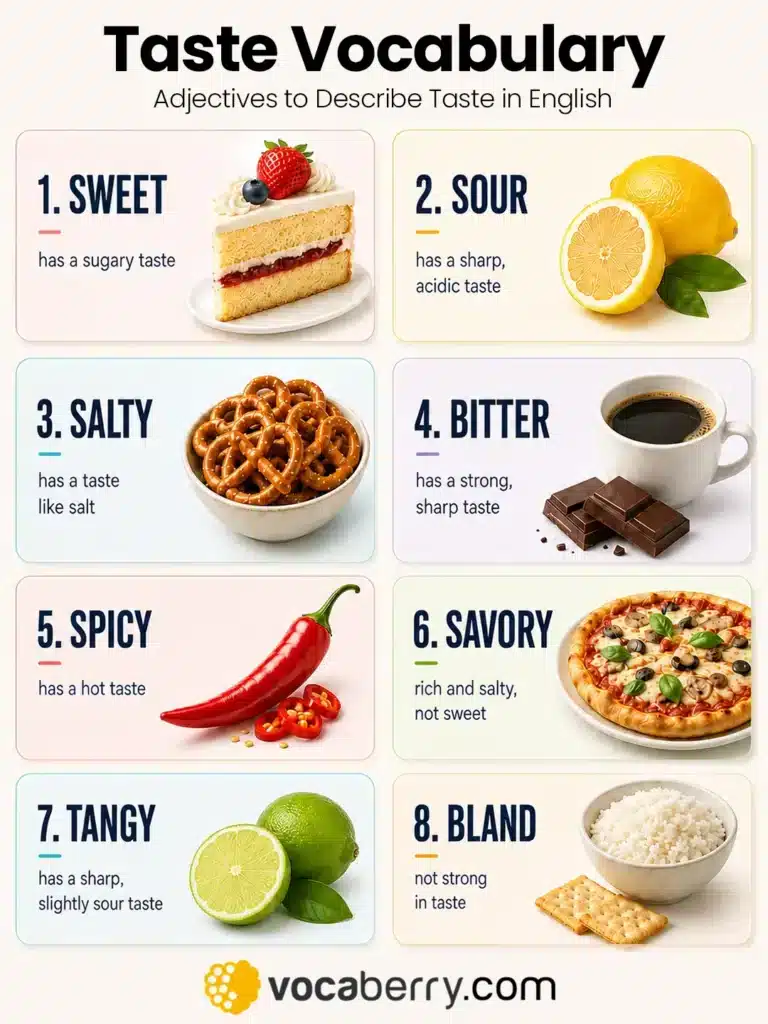
Sweet
Sweet describes food or drinks that taste like sugar or honey.
Example: This mango is really sweet, so it makes a perfect summer snack.
Sour
Sour describes a strong, acidic taste like lemon or vinegar.
Example: The lemon was so sour that I could barely eat it.
Salty
Salty describes food that has a noticeable taste of salt.
Example: The soup is a bit too salty for me, so I’m going to add some water.
Bitter
Bitter describes a strong taste found in foods and drinks such as black coffee and dark chocolate.
Example: Black coffee can taste bitter if you drink it without milk or sugar.
Savory
Savory describes food that is salty, spicy, or full of flavor rather than sweet.
Example: She served a savory tart with cheese, tomatoes, and fresh herbs.
Savory is the American spelling; savoury is the British spelling.
Umami
Umami is a deep, satisfying taste found in foods such as meat, mushrooms, tomatoes, and soy sauce.
Example: Mushrooms and Parmesan cheese add a strong umami taste to the dish.
Spicy
Spicy describes food that creates a hot or burning feeling in your mouth, often because it contains chili peppers or strong spices.
Example: This curry is very spicy, so I need a glass of water.
Hot
When talking about flavor, hot describes food that is spicy and creates a burning feeling in your mouth.
Example: This chili sauce is extremely hot, even for people who enjoy spicy food.
Bland
Bland describes food that has very little flavor.
Example: The soup tasted bland, so I added some herbs and spices.
Mild
Mild describes a taste that is gentle and not strong, sharp, or spicy.
Example: I usually choose mild salsa because I don’t like food that is too spicy.
Tangy
Tangy describes a pleasantly sharp taste that is often slightly sour.
Example: The yogurt has a tangy flavor that goes really well with fresh fruit.
Tart
Tart describes a sharp, sour taste that is often pleasant, especially in fruit.
Example: This lemon tart has a nice balance between sweet and tart.
Sharp
Sharp describes a strong, noticeable taste that is often slightly sour or acidic.
Example: The cheese has a sharp flavor that becomes stronger as it ages.
Zesty
Zesty describes a fresh, lively taste, often from lemon, lime, or other citrus fruit.
Example: The lemon dressing gives the salad a fresh, zesty flavor.
Rich
Rich describes a full, satisfying flavor that can feel heavy in large amounts.
Example: This chocolate cake is very rich, so I usually have just a small slice.
Strong
Strong describes a flavor that is powerful and easy to notice.
Example: This coffee has a strong flavor, so I usually add a little milk.
Flavorful
Flavorful describes food that has a lot of pleasant flavor.
Example: The chicken is tender and flavorful thanks to the herbs and spices.
Tasteless
Tasteless describes food or drinks that have little or no noticeable taste.
Example: The sauce was completely tasteless, even though it looked delicious.
Plain
Plain describes food that is simple and has few or no added flavors, sauces, or seasonings.
Example: I ordered plain rice because I wanted something simple with the spicy curry.
Fruity
Fruity describes food or drinks that taste or smell like fruit.
Example: This tea has a light, fruity flavor that reminds me of berries.
Citrusy
Citrusy describes a fresh taste or smell like lemon, lime, orange, or other citrus fruit.
Example: Fresh orange zest gives the cake a pleasant citrusy taste.
Minty
Minty describes a cool, fresh taste or smell like mint.
Example: The chewing gum has a strong minty taste that lasts for a long time.
Garlicky
Garlicky describes food that has a noticeable taste or smell of garlic.
Example: This pasta is quite garlicky, which is perfect if you really like garlic.
Fishy
Fishy describes food that has a noticeable taste or smell of fish.
Example: The soup has a slightly fishy flavor because it contains anchovies.
Peppery
Peppery describes a warm, slightly sharp taste like black pepper.
Example: The chicken has a mild peppery flavor without being too hot.
Smoky
Smoky describes a flavor that reminds you of smoke or food cooked over a fire.
Example: The chicken picked up a smoky flavor from the charcoal grill.
Nutty
Nutty describes a flavor that tastes or smells like nuts.
Example: Brown rice has a slightly nutty flavor that goes well with roasted vegetables.
Buttery
Buttery describes food or drinks that taste like butter.
Example: These crackers have a mild, buttery flavor and a crisp texture.
Herby
Herby describes food with a noticeable flavor of herbs such as basil, parsley, or rosemary.
Example: The sauce has a fresh, herby flavor from the basil and parsley.
Earthy
Earthy describes a deep, natural flavor often found in mushrooms, beets, and root vegetables.
Example: Roasted beets have an earthy taste that becomes sweeter as they cook.