
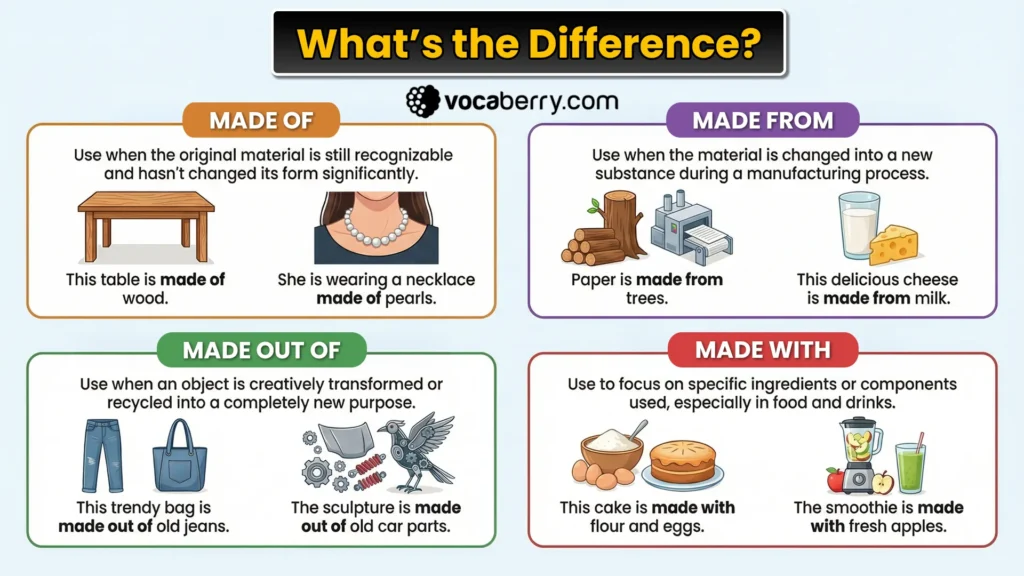
Many English learners feel confused about made of, made from, made out of, and made with. These phrases look similar, but they are used in different situations. The difference depends on whether the material stays the same, changes form, or is used as an ingredient.
In this guide, you’ll learn the difference between made of, made from, made out of, and made with through clear explanations and practical examples.
Made Of
We use made of when the original material is still visible and has not changed form. The material keeps the same basic shape or properties, and you can clearly recognize it in the final product.
Examples:
- The table is made of wood.
- This shirt is made of cotton.
- The ring is made of gold.
- The house is made of stone.
- The bottle is made of glass.
- The bridge is made of steel.
Made From
We use made from when the original material changes into something different. The material is transformed during the process, and you cannot easily recognize its original form in the final product. Unlike made of, the material does not stay the same.
Examples:
- Paper is made from wood.
- Wine is made from grapes.
- Cheese is made from milk.
- Bread is made from flour.
- Plastic is made from oil.
- Chocolate is made from cocoa beans.
Made Out Of
We use made out of in a similar way to made of. It is often used when something is created from unusual, recycled, or creative materials. It is more common in informal or everyday spoken English.
Examples:
- She made a dress out of old newspapers.
- He built a chair out of recycled wood.
- The sculpture is made out of metal parts.
- They made toys out of cardboard boxes.
- The boat is made out of plastic bottles.
- The bag is made out of old jeans.
Made With
We use made with when we talk about ingredients, components, or smaller parts used to create something. The focus is on what is included in the product, not on the original material itself.
Examples:
- The cake is made with flour, eggs, and sugar.
- This pizza is made with fresh vegetables.
- The soup is made with chicken and rice.
- The sauce is made with tomatoes and garlic.
- This perfume is made with natural oils.
- The sandwich is made with whole wheat bread.
Comparison Table
| Phrase | Usage | Example |
|---|---|---|
| made of | Material is visible. | The table is made of wood. |
| made from | Material changes form. | Paper is made from wood. |
| made out of | Unusual or recycled material. | She made a bag out of old jeans. |
| made with | Includes ingredients. | The sauce is made with fresh herbs. |


