In English, especially and specially look very similar and are often confused. They both come from the word special, but they are used in different ways and have different meanings.
In this article, you will learn what especially and specially mean, how they work in sentences, and how to choose the right word with clear examples.
What Does Especially Mean?
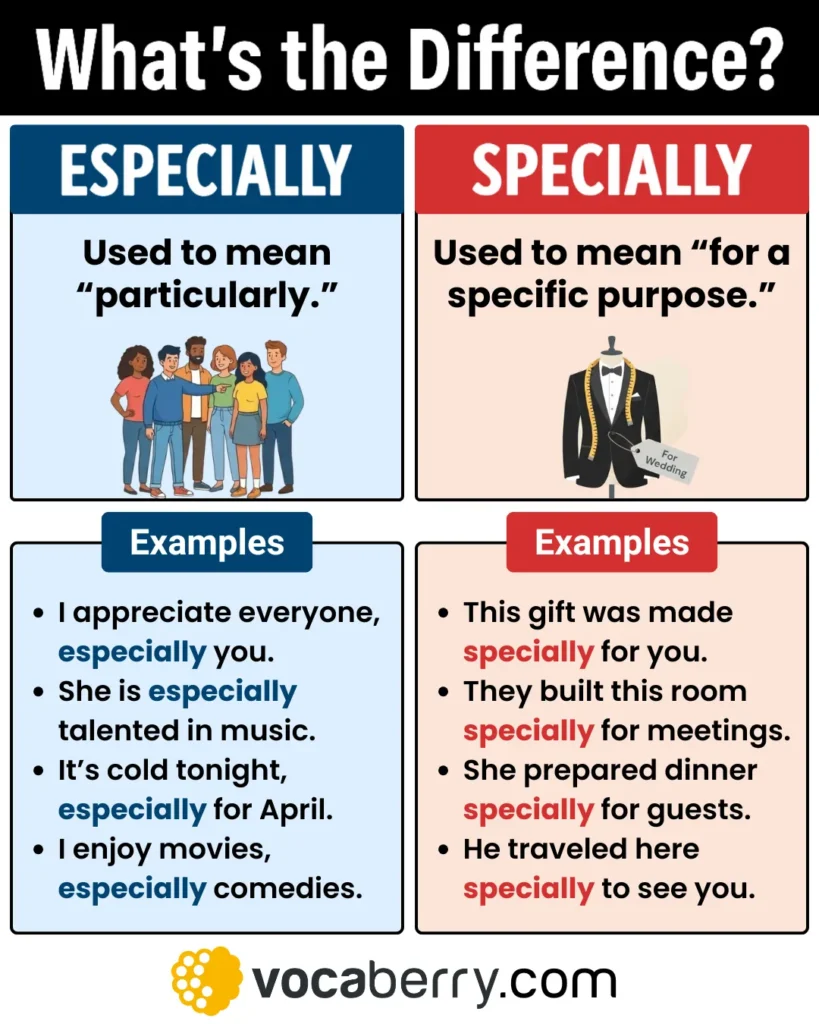
Especially is an adverb that means particularly or more than others. We use it to highlight one thing in a group or to give extra importance to part of a sentence.
It often answers questions like “Which one more than others?” or “What stands out most?”. In sentences, especially usually appears before the word or phrase it emphasizes.
It is very common after a comma at the end of a sentence, and it is also used before prepositional phrases such as especially in and especially for.
Examples:
- I like fruit, especially strawberries.
- She enjoys sports, especially tennis.
- The city is beautiful, especially at night.
- This job is hard, especially for beginners.
- Winter is difficult here, especially in January.
What Does Specially Mean?
Specially is an adverb that means for a special purpose or specifically. We use it when something is done, made, prepared, or arranged for a particular reason or person.
It often answers the question “Why was this done?” Specially is very common before past participles like made, designed, prepared, created, and built.
It is also frequently used before for + someone/something, and with verbs to show that an action was done for one special reason.
Examples:
- This cake was specially made for you.
- The room was specially prepared for the guests.
- This tool was specially designed for beginners.
- I came specially to see you.
- She bought it specially for the party.
Difference Between Especially and Specially
Even though especially and specially look similar, their meanings are clearly different. Especially is used to emphasize one thing more than others. Specially is used to show purpose or intention.
If you can replace the word with “particularly,” use especially.
If you can replace it with “for a specific purpose,” use specially.
Examples:
- I love desserts, especially chocolate.
- This chocolate was specially made for me.
- She likes music, especially jazz.
- He bought a gift specially for his mother.
Summary Table: Especially vs. Specially
| Word | Meaning | Example |
|---|---|---|
| Especially | More than others; particularly | I love winter, especially snow. |
| Specially | For a special purpose; specifically | This coat was specially made. |
Especially vs. Specially – FAQs
What is the difference between especially and specially?
Especially means particularly or more than other things. Specially means for a special purpose or in a special way. Even though they look similar, their meanings are different.
Can especially and specially be used interchangeably?
No, they are not interchangeable. They have different meanings and are used in different situations. Using the wrong one can change the meaning of the sentence.
When should I use especially in a sentence?
Use especially when you want to emphasize one thing more than others. It shows that something is more important, noticeable, or significant.
When should I use specially in a sentence?
Use specially when something is made, designed, or done for a specific purpose. It focuses on intention or special preparation.
What is the meaning of especially in English?
Especially means particularly or more than others. It is used to highlight one thing in a group.
What is the meaning of specially in English?
Specially means for a special purpose or in a particular way. It shows that something was done intentionally.