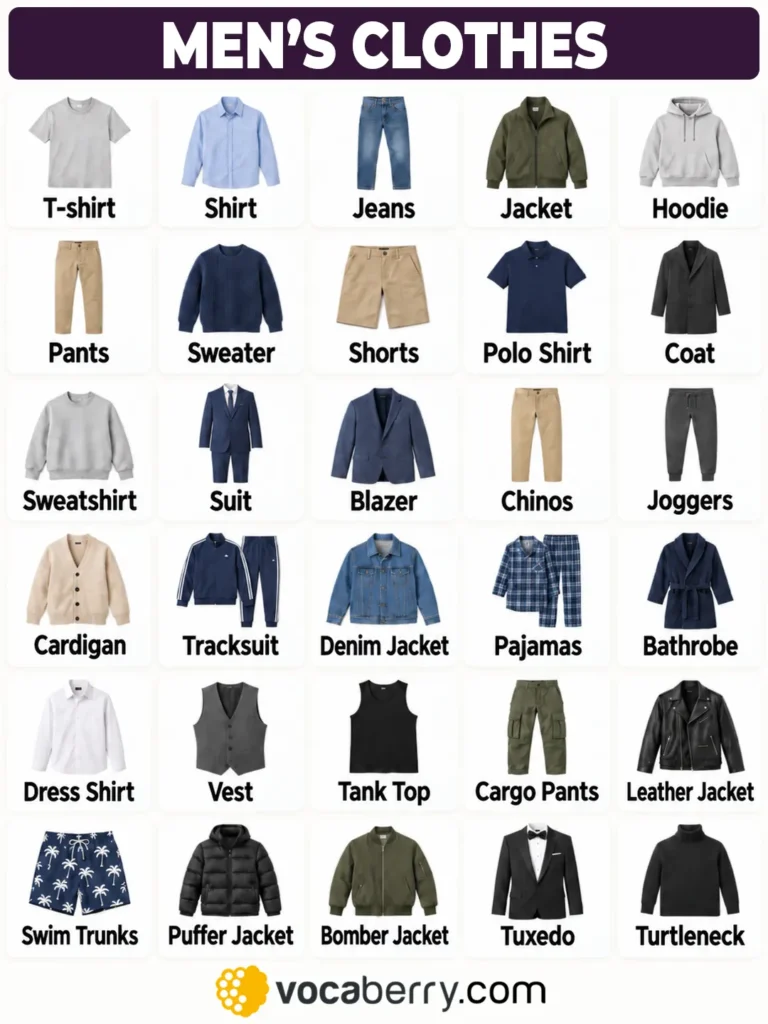
Men’s clothes names are useful vocabulary for talking about what people wear, shopping for clothes, and describing different outfits. In this article, you’ll learn common men’s clothing, footwear, and accessories in English with their meanings and example sentences.
Common Men’s Clothes in English
Here are common men’s clothes in English with their meanings and example sentences.
T-shirt
A casual top with short sleeves and no collar.
Example: He wore a white T-shirt with jeans.
Shirt
A garment for the upper body, usually with a collar, sleeves, and buttons down the front.
Example: He wore a blue shirt to work.
Dress shirt
A smart or formal shirt, usually worn with a suit or smart trousers.
Example: He wore a white dress shirt to the wedding.
Polo shirt
A casual shirt with a collar, a short row of buttons at the neck, and usually short sleeves.
Example: He wore a navy polo shirt with beige chinos.
Flannel shirt
A soft shirt made from flannel, often with a checked pattern.
Example: He wore a checked flannel shirt on the cool autumn day.
Tank top
A sleeveless top with wide shoulder straps.
Example: He wore a tank top while exercising at the gym.
Sweater (UK: jumper)
A warm knitted garment worn on the upper body.
Example: He wore a wool sweater on the cold morning.
Cardigan
A knitted garment that opens at the front and is worn over other clothes.
Example: He wore a gray cardigan over his shirt.
Sweatshirt
A casual top made from thick, soft fabric, usually with long sleeves.
Example: He wore a sweatshirt while relaxing at home.
Hoodie
A casual sweatshirt or top with a hood.
Example: He put on a hoodie before going for a walk.
Turtleneck
A top or sweater with a high collar that fits closely around the neck.
Example: He wore a black turtleneck under his jacket.
Jacket
A short outer garment worn over other clothes.
Example: He took a light jacket with him on the cool evening.
Denim jacket
A casual jacket made from denim.
Example: He wore a denim jacket over a black T-shirt.
Leather jacket
A jacket made from leather or a similar material.
Example: He wore a black leather jacket with jeans.
Bomber jacket
A short jacket with a fitted waist and cuffs, usually with a zipper at the front.
Example: He wore a bomber jacket on the cool evening.
Puffer jacket
A warm, padded jacket with thick sections that help keep the body warm.
Example: He wore a puffer jacket on the cold winter day.
Blazer
A smart jacket that can be worn with trousers or jeans and does not have to match them.
Example: He wore a navy blazer with a white shirt and chinos.
Suit jacket
A formal jacket designed to be worn with matching suit trousers.
Example: He put on his suit jacket before the meeting.
Coat
An outer garment worn over other clothes, especially in cold weather.
Example: He wore a warm coat on the cold winter morning.
Trench coat
A long, lightweight coat, usually with a belt, that is often worn in rainy weather.
Example: He wore a trench coat on the rainy morning.
Raincoat
A waterproof coat worn to keep the body dry in the rain.
Example: He put on his raincoat before going outside.
Suit
A set of formal clothes consisting of a matching jacket and trousers.
Example: He wore a dark suit to the business meeting.
Tuxedo
A very formal suit worn for special occasions.
Example: He wore a black tuxedo to the formal dinner.
Vest (UK: waistcoat)
A sleeveless garment worn over a shirt, often as part of a formal outfit.
Example: He wore a gray vest under his suit jacket.
Jeans
Trousers made from denim.
Example: He wore dark jeans with a casual shirt.
Pants (UK: trousers)
Clothing worn from the waist down with separate sections for each leg.
Example: He wore black pants with a white shirt.
Chinos
Casual cotton trousers that are usually smarter than jeans.
Example: He wore beige chinos with a polo shirt.
Cargo pants
Casual trousers with large pockets, usually on the sides of the legs.
Example: He wore cargo pants with a plain T-shirt.
Joggers
Soft, casual trousers, usually with an elastic or drawstring waist and fitted ankles.
Example: He wore joggers and a hoodie while relaxing at home.
Sweatpants
Soft, loose trousers commonly worn for exercise or casual activities.
Example: He changed into sweatpants after work.
Shorts
Short trousers that leave most of the legs uncovered.
Example: He wore shorts and a T-shirt on the hot summer day.
Swim trunks
Shorts designed for men or boys to wear while swimming.
Example: He changed into his swim trunks before going to the pool.
Tracksuit
A matching set of a casual jacket and trousers, often worn for sports or everyday activities.
Example: He wore a tracksuit while traveling.
Underwear
Clothing worn under other clothes.
Example: He packed clean underwear for the trip.
Boxers
Loose-fitting men’s underwear with short legs.
Example: He bought a pack of cotton boxers.
Boxer briefs
Close-fitting men’s underwear with short legs.
Example: He prefers boxer briefs for everyday wear.
Briefs
Close-fitting underwear that does not cover the upper legs.
Example: He packed several pairs of briefs for the trip.
Undershirt
A light shirt worn underneath another shirt.
Example: He wore a white undershirt beneath his dress shirt.
Pajamas (UK: pyjamas)
Loose, comfortable clothes worn for sleeping.
Example: He changed into his pajamas before going to bed.
Bathrobe
A loose garment worn over nightwear or before and after bathing.
Example: He put on his bathrobe after taking a shower.
Men’s Shoes and Footwear
Here are common types of men’s shoes and footwear in English with their meanings and example sentences.
Sneakers (UK: trainers)
Comfortable casual or sports shoes, usually with rubber soles.
Example: He wore white sneakers with jeans and a T-shirt.
Running shoes
Sports shoes designed for running and exercise.
Example: He put on his running shoes before going for a morning run.
Dress shoes
Smart or formal shoes usually worn with a suit or smart trousers.
Example: He wore black dress shoes with his suit.
Oxford shoes
Smart or formal lace-up shoes, usually made from leather.
Example: He wore black Oxford shoes to the wedding.
Loafers
Low shoes without laces that can easily be slipped on and off.
Example: He wore brown loafers with beige chinos.
Boots
Footwear that covers the foot and extends above the ankle.
Example: He wore leather boots on the cold, wet day.
Chelsea boots
Ankle boots with elastic panels on the sides and no laces.
Example: He wore black Chelsea boots with dark jeans.
Work boots
Strong, protective boots designed for work or outdoor activities.
Example: He wore work boots at the construction site.
Hiking boots
Strong boots designed to support and protect the feet while hiking.
Example: He wore hiking boots on the mountain trail.
Sandals
Open shoes with straps, commonly worn in warm weather.
Example: He wore sandals while walking along the beach.
Flip-flops
Light, open footwear with a strap that passes between the toes.
Example: He wore flip-flops by the pool.
Slippers
Soft, comfortable footwear worn indoors.
Example: He put on his slippers when he got home.
Men’s Accessories
Here are common men’s accessories in English with their meanings and example sentences.
Tie
A long, narrow piece of fabric worn around the neck, usually with a formal shirt.
Example: He wore a blue tie with his gray suit.
Bow tie
A small necktie tied in the shape of a bow.
Example: He wore a black bow tie with his tuxedo.
Belt
A strip of material worn around the waist to hold clothes in place or for decoration.
Example: He wore a brown leather belt with his trousers.
Suspenders (UK: braces)
Straps worn over the shoulders to hold up trousers.
Example: He wore suspenders with his formal trousers.
Hat
A covering worn on the head for warmth, protection, or style.
Example: He wore a hat to protect his head from the sun.
Cap
A soft hat with a visor at the front.
Example: He wore a cap to keep the sun out of his eyes.
Beanie
A soft, close-fitting hat usually worn in cold weather.
Example: He put on a warm beanie before going outside.
Scarf
A long piece of fabric worn around the neck, especially for warmth.
Example: He wrapped a wool scarf around his neck.
Gloves
Hand coverings with separate sections for each finger and the thumb.
Example: He wore gloves to keep his hands warm.
Sunglasses
Dark glasses worn to protect the eyes from bright sunlight.
Example: He put on his sunglasses before going outside.
Watch
A small timepiece worn on the wrist.
Example: He wore a watch with his business suit.
Ring
A small circular piece of jewelry worn on a finger.
Example: He wore a silver ring on his right hand.
Wallet
A small folding case used to carry money, cards, and identification.
Example: He kept his wallet in his jacket pocket.
Backpack
A bag carried on the back with two shoulder straps.
Example: He carried his laptop in a backpack.
Briefcase
A flat case used for carrying documents, a laptop, or other work items.
Example: He carried a leather briefcase to the office.
Cufflinks
Small fasteners used to close the cuffs of some formal shirts.
Example: He wore silver cufflinks with his dress shirt.
American and British Men’s Clothing Vocabulary
Some men’s clothing words are different in American and British English. For example, pants in American English are called trousers in British English, while pants in British English usually means underwear. The table below shows some common differences.
| American English | British English |
|---|---|
| pants | trousers |
| sweater | jumper |
| vest | waistcoat |
| undershirt | vest |
| suspenders | braces |
| sneakers | trainers |
| tuxedo | dinner jacket |
| underwear | pants |
| pajamas | pyjamas |